Local Product & Place Search Engine
The core entry point of StartToFind. Customers search for products, shops, services, rooms, or categories and get real, mapped results back, with live counts, sponsored placements from local shops, and friend activity, not a generic web listing.
- Search across every participating local shop at once
- Sponsored placements, the advertising layer that funds the free core
- Discovery of small or unique shops that would otherwise be buried behind big platforms
Browse Every Shop, Building & Campus
Beyond product search, customers can browse the directory itself, filtered by what actually matters to them, not just price.
- Filter by local origin, accessibility, vegan, or cheapest-first
- Browse by building, campus, or individual shop
- Distance and price shown up front on every card
Indoor Mapping & Pathfinding
The map layer that ties everything together, from city-wide search down to campus- and building-level detail. Wheelchair-, stroller-, and delivery-friendly routing is part of the same engine.
- Built on OpenStreetMap, with every mapped site pinned automatically
- Route guidance to rooms, shelves, departments, entrances, and exits
- Community and business-verified corrections keep maps accurate over time
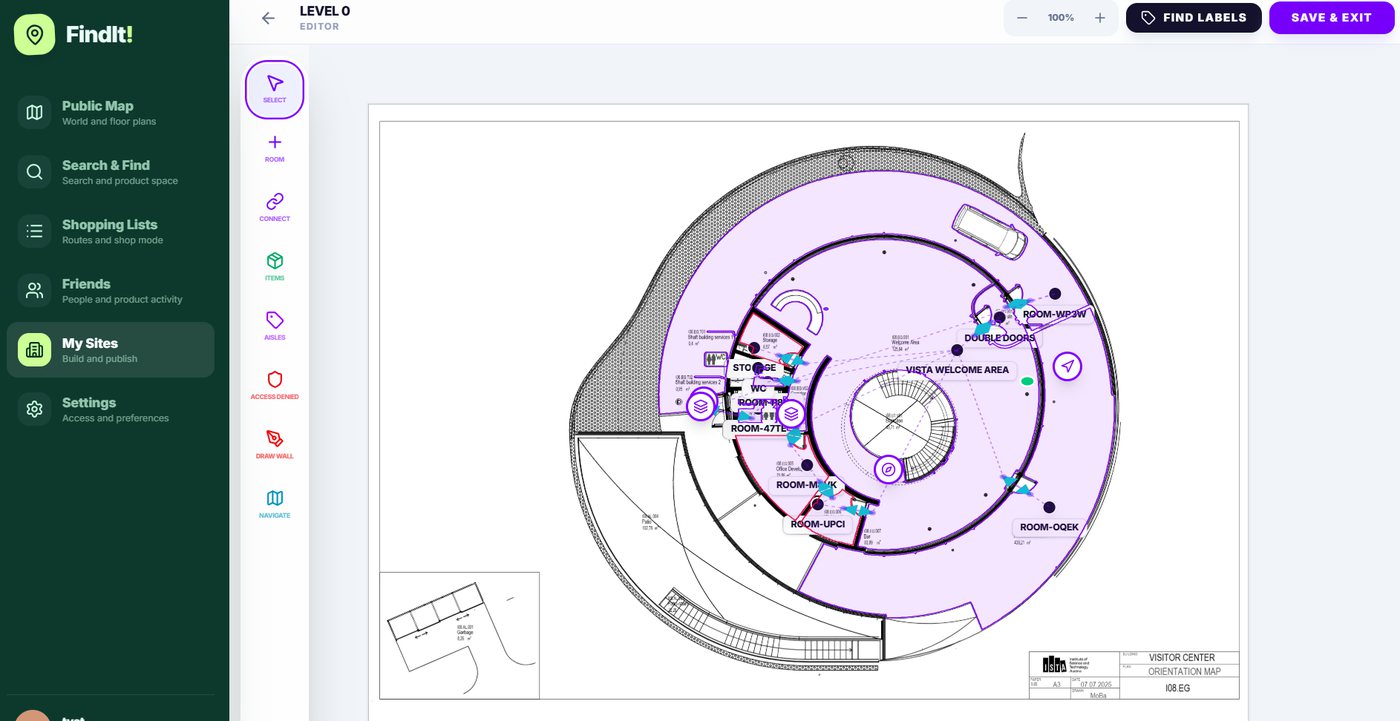
Automated Graph Extraction
Deterministic, lightweight algorithms convert an uploaded floor plan into a pathfinding-ready graph: rooms, aisles, doors, and connections, editable and correctable in the browser. No expensive sensors, no heavy AI training required for the first version.
- Low cost per site, which is what makes free onboarding possible at all
- Fast onboarding, with the long-term goal of map creation in minutes
Shopping Lists, Shop Mode & Self-Checkout
Build a list before visiting, then get it turned into a live in-store route with a synced checklist, nearby personalized offers, and budget tracking, down to a working scan-and-pay checkout.
- Full StartToFind Route with live position and a synced, tickable list
- Location-aware, personalized "nearby advertisements" while you shop
- StartToFind Checkout with wallet or card, currently a working prototype, ready to connect to a real payment provider
Free SME Digital Storefronts
Every participating business gets a step-by-step setup dashboard: building & layout, products & deals, scan & organise, shop info. A lightweight alternative to expensive e-commerce infrastructure.
- Guided setup checklist, no technical skills required
- Manage every building, floor plan, and product catalogue from one place
- This is exactly what the founding team walks pilot partners through, in person
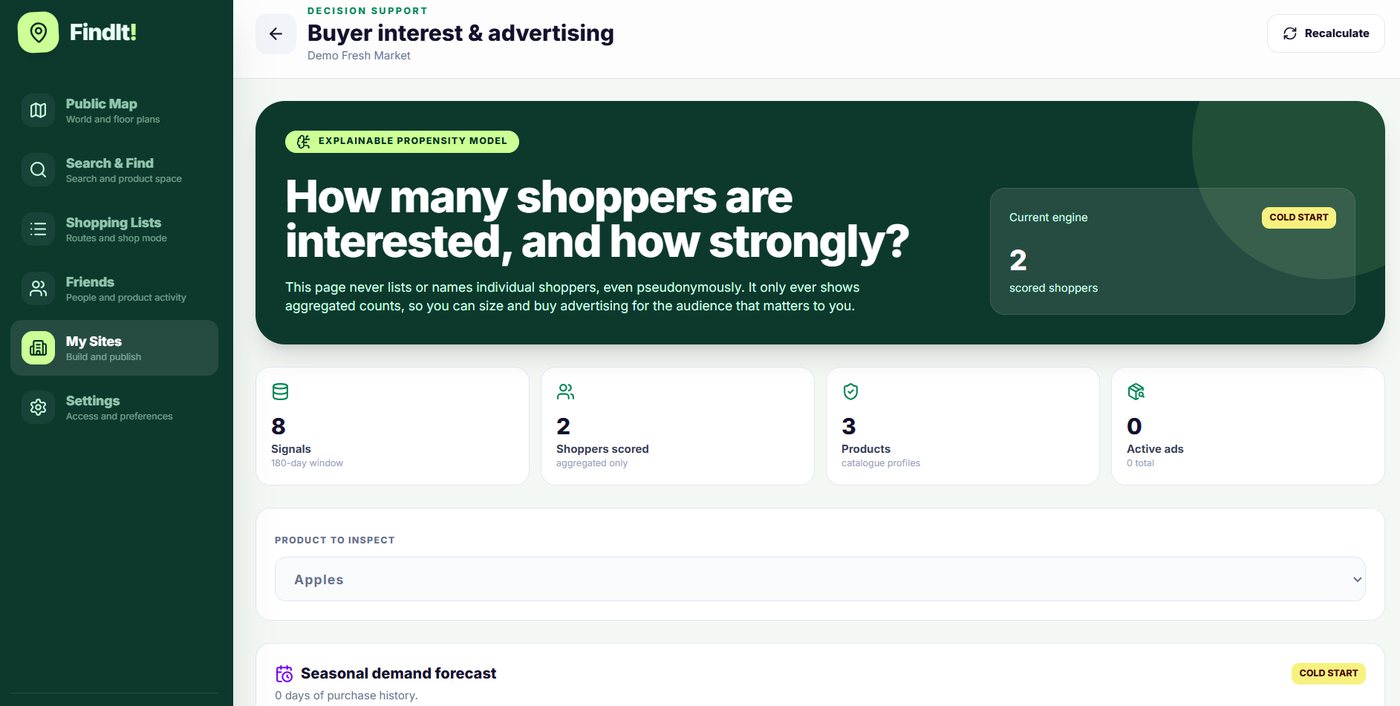
Explainable predictive model
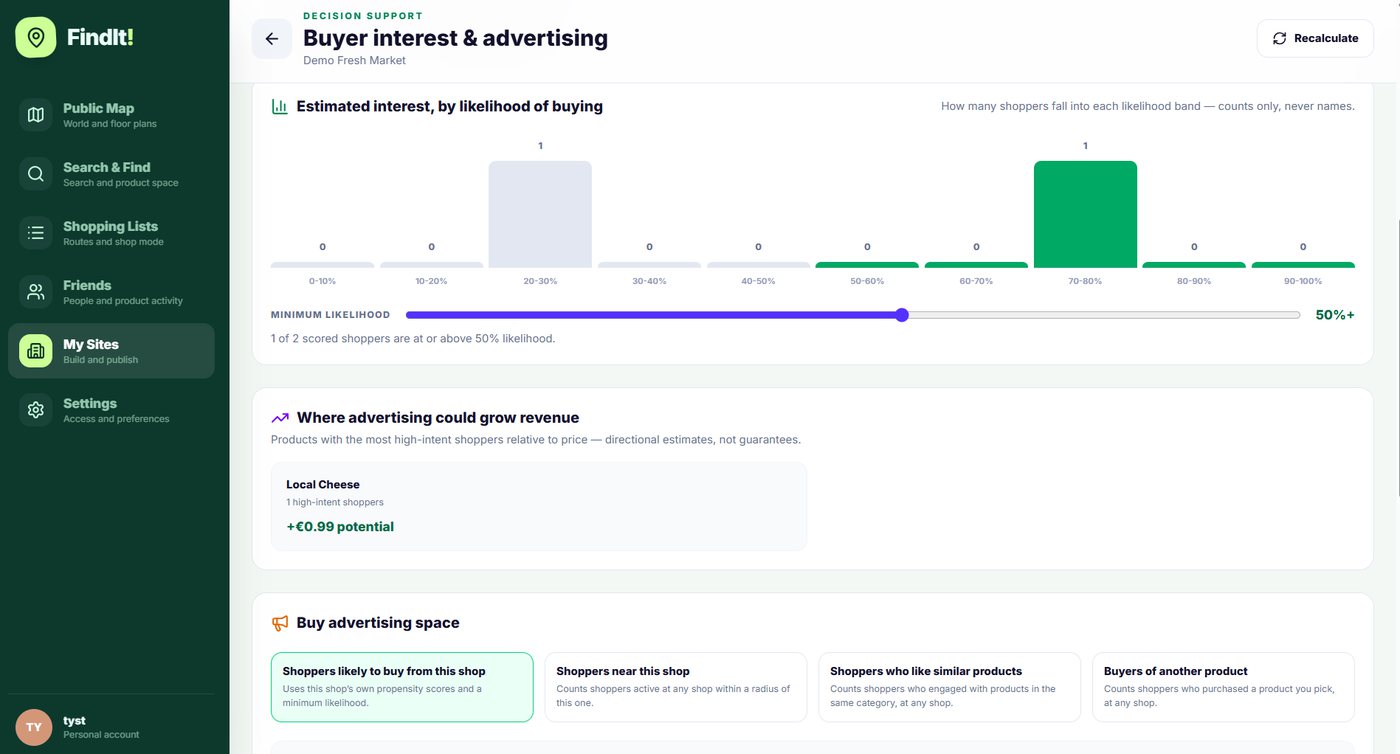
Buy advertising space, by intent
Predictive Advertising & Buyer Interest
This is the engine behind the pilot's 200% ad-credit bonus and 3 years of free analytics: an explainable model that scores buying likelihood from real signals, without ever naming individual shoppers, only aggregated counts a shop can size and target advertising against.
It also reveals where shoppers dwell, where they stop and wait, which aisles they typically skip, and which locations are best for visibility actions. We do cross-correlation across the full product catalogue to see which products are bought together, so a shop can turn those patterns into better placements, bundles, and action plans.
- Aggregated-only, privacy-respecting predictive scoring
- Surfaces exactly where advertising could grow revenue, product by product
- Identifies dwell hotspots, skipped aisles, and high-value product combinations
- Target by likelihood to buy, proximity, similar-product interest, or cross-shop purchase history
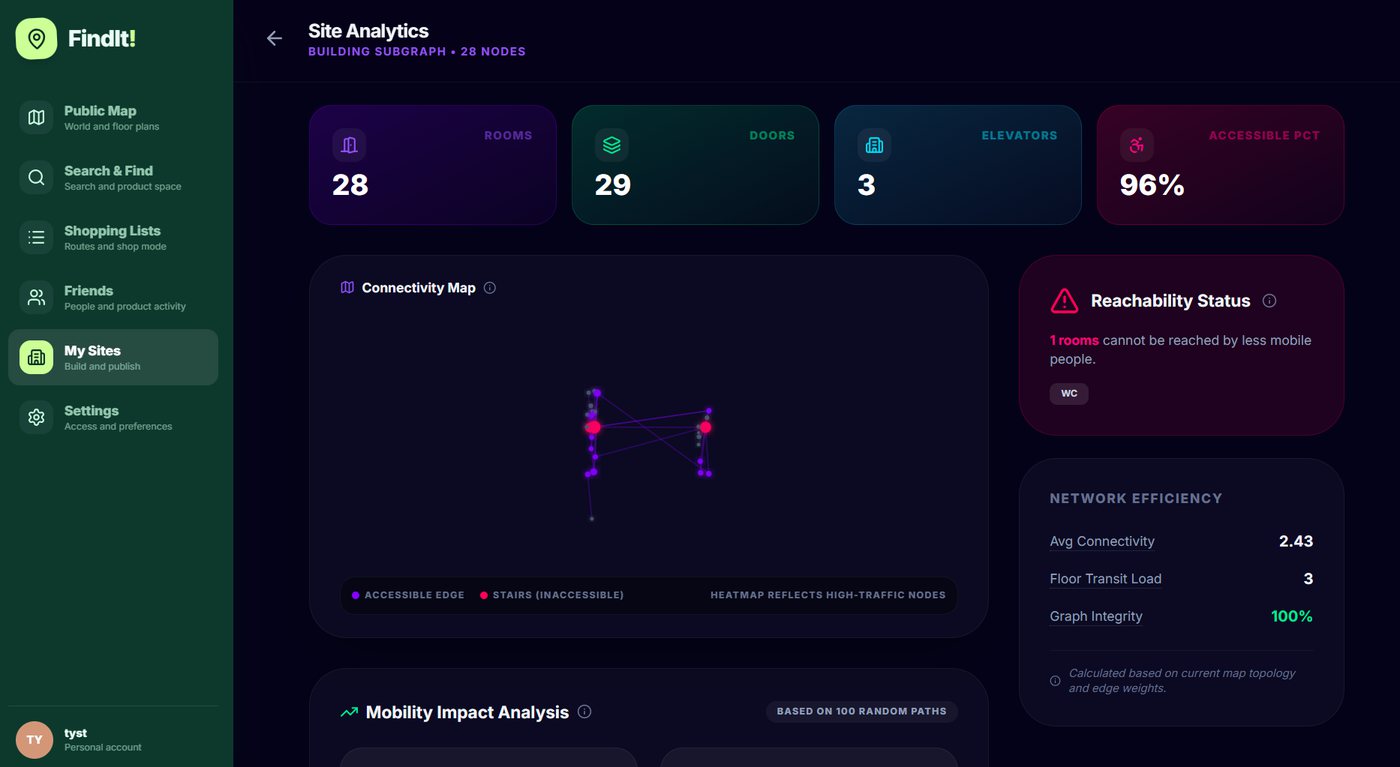
Site Analytics & Accessibility Compliance
Every mapped site doubles as an accessibility audit, flagging rooms unreachable by less mobile people, and scoring the building's overall connectivity and graph integrity.
- Connectivity map with accessible vs. inaccessible edges highlighted
- Reachability status per room, useful for compliance reporting
- Network efficiency metrics: average connectivity, floor transit load, graph integrity
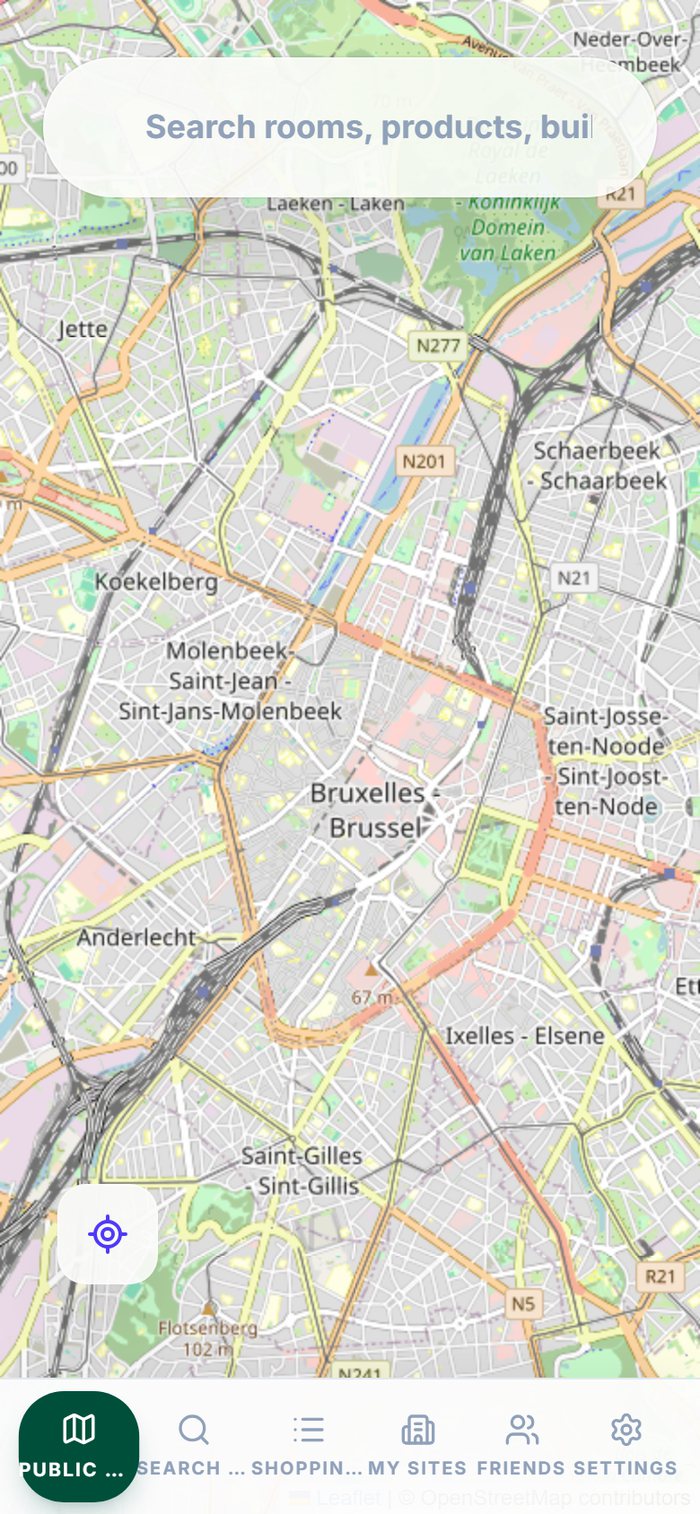
Works Everywhere
Same app, same data, responsive down to a phone screen, because most local "before I leave home" searches happen on mobile.
- Responsive layout, no separate mobile app required to try it
- Bottom tab navigation on small screens
- Built on the same live data as the desktop view, no separate mobile dataset